
Can You Use a Porta Potty in Winter?
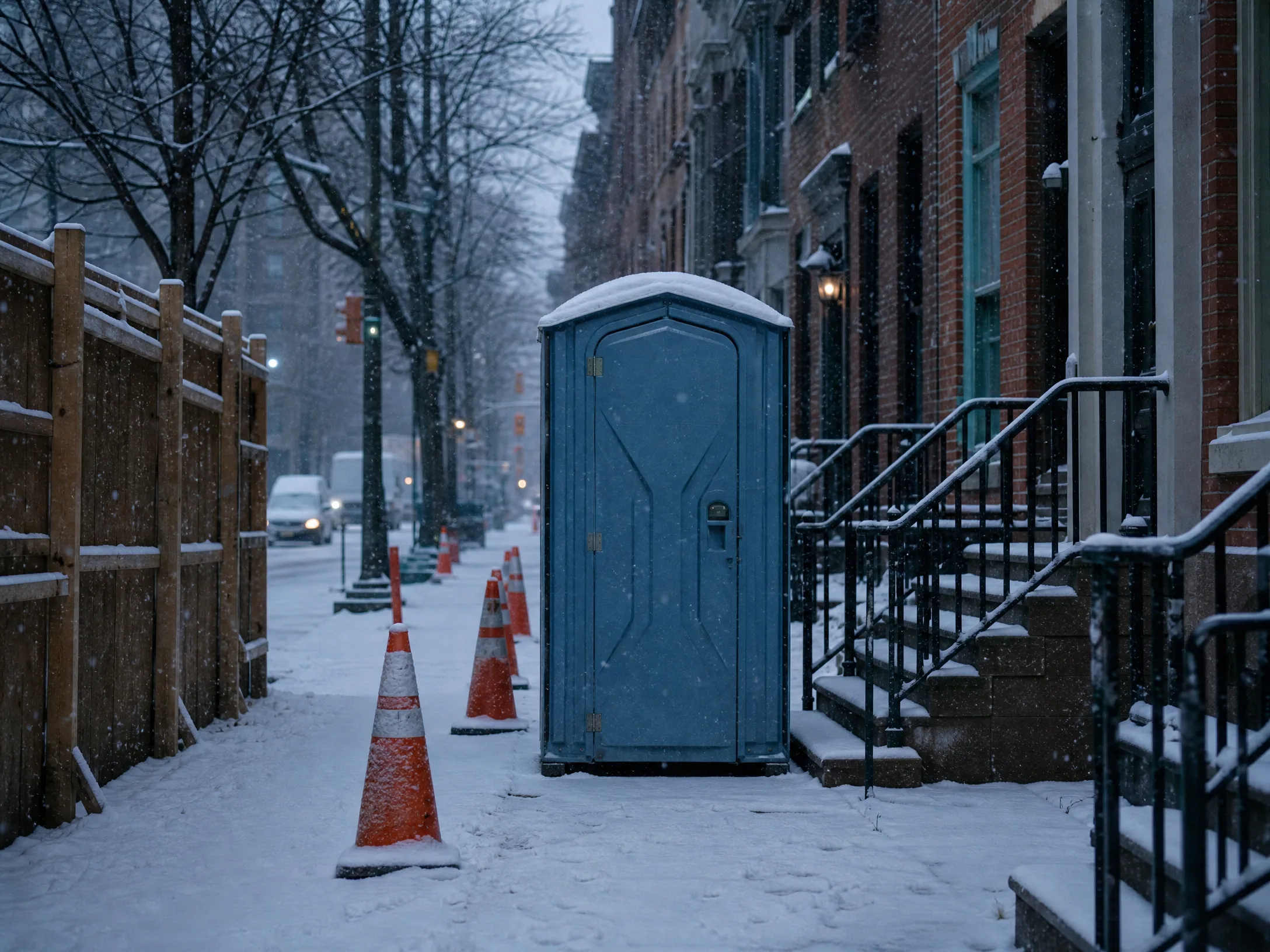
Yes. A standard unit holds 60 to 70 gallons in its tank, and that volume does not freeze solid overnight even on a cold Springfield night. What changes is how fast waste breaks down and how the door and vent hardware handle ice. We switch to a lower-freeze-point chemical blend and, for job sites running through January and February, we tighten the pump interval so tanks never sit near full. If you are still scoping out standard porta potty rental options for a winter build, ask about insulated units before delivery, since a bare unit on an exposed slab loses heat faster than one tucked near a windbreak. For crews working multi-week jobs, a monthly porta potty rental with a locked-in service day tends to hold up better than ad hoc scheduling. General sanitation requirements under OSHA 1926.51(c) do not pause for weather. They apply the same in July and in January.
What Happens If a Porta Potty Freezes?
The tank rarely freezes solid, but the trap, hoses and vent can ice over if service lapses. That is the actual failure point in cold weather, not the holding tank itself. When ice blocks a vent, odor builds up inside the unit fast, and a frozen trap can jam a door or make the flush mechanism on a deluxe flushable porta potty stop working entirely. We handle this with antifreeze-rated fluid in the tank and by routing service trucks more often to sites in Springfield during hard freezes. If you are staging equipment near Chicopee, 6.6 miles north, or out toward Ludlow, 8.3 miles northeast, we build drive time into the schedule so no unit sits past its service window. Crews planning ahead of a storm should look at emergency porta potty rental rather than wait until a unit is already frozen shut.
How Do You Keep a Porta Potty from Freezing?
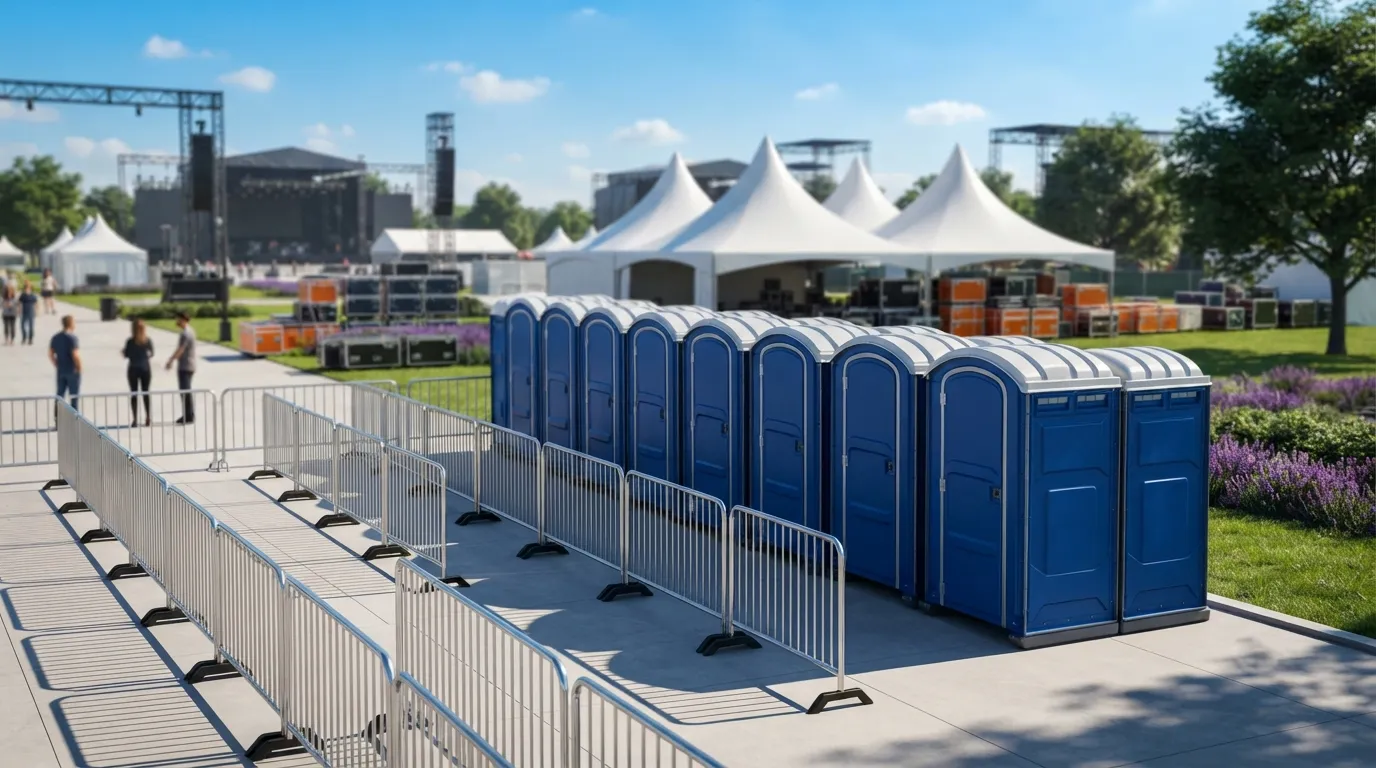
Keep it out of direct wind, keep the service interval tight, and use the right fluid. Those three things cover most of it. Placement matters more in winter than any other season: a unit set against a building wall or fence line holds heat better than one standing alone in an open lot, which is worth reviewing in our porta potty placement guide before delivery day. ANSI/PSAI Z4.3 sets a baseline service interval of once a week for up to 10 users over a 40-hour week, and in winter we often run tighter than that baseline on active job sites. Adding a heated option matters too. A portable sink hand wash station with hot and cold water solves a problem plain sanitizer stations cannot: OSHA 1926.51(f)(1) requires washing facilities where workers apply paints, coatings, herbicides or insecticides, and cold tap water alone does not cut grease or residue well in freezing conditions. A self-contained portable sink with hot and cold water keeps that washing station functional even when a hard freeze would otherwise gel a cold-only unit. Under 29 CFR 1910.141(d)(2), washing facilities need soap and a way to dry hands, and hand sanitizer does not satisfy that on its own.
Do You Need Different Equipment for Winter Job Sites?
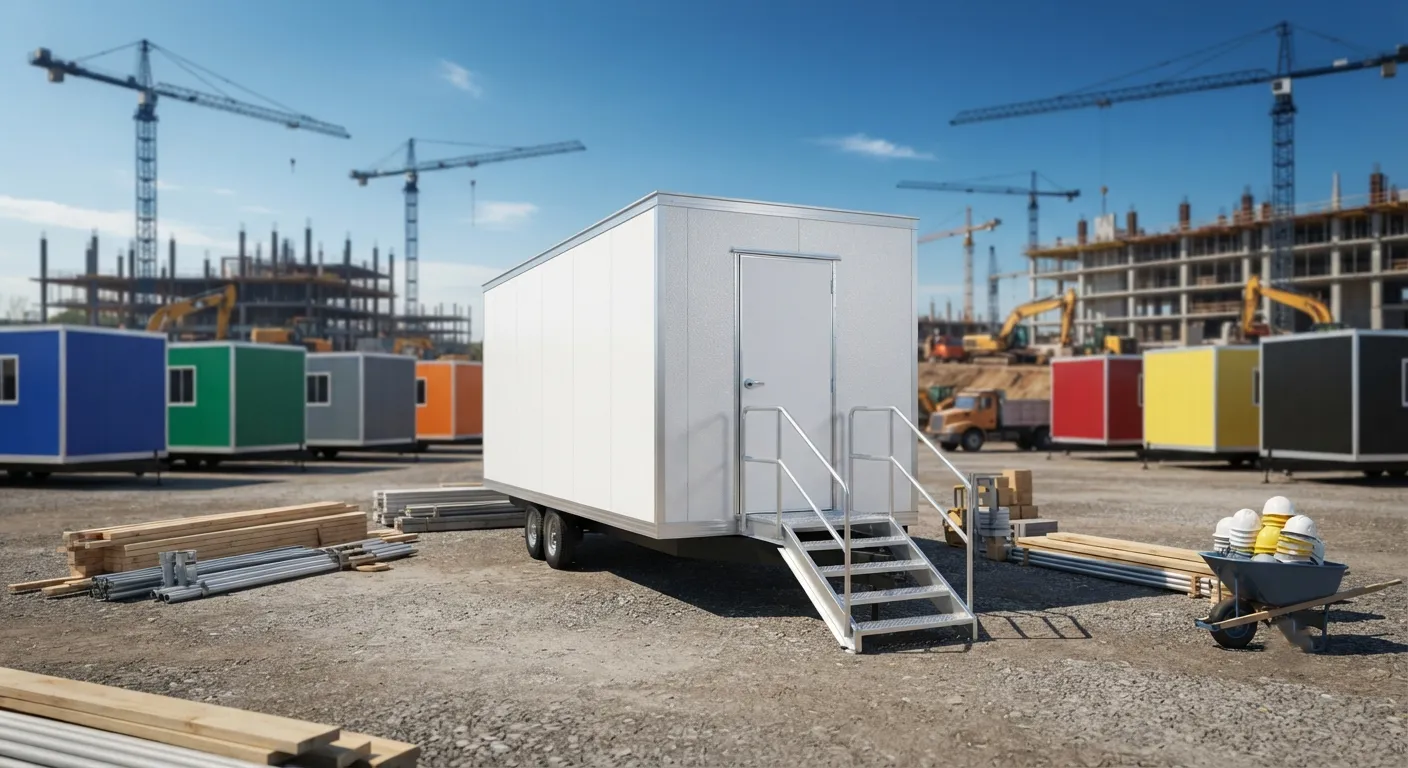
Some, yes. Beyond the toilet itself, winter job sites in Springfield often need a hot and cold portable sink for washing after cold-weather sealants or coatings, and a heated option instead of a bare cold-water tap that can freeze mid-shift. If your site also needs cold storage, a 20ft cold storage container keeps materials and supplies from freezing overnight, which pairs well with a 20ft storage container booking for tool and material staging. For projects running a longer footprint, a 4 stall restroom trailer with built-in heat handles crew comfort better than stand-alone units when temperatures stay below freezing for weeks. Fencing crews and material yards should also check whether temporary fence rental panels are rated for wind loading, since winter gusts hit exposed chain link harder than a summer breeze. None of this is required by any single rule; it is what keeps a site running instead of stalling out over a frozen unit or a burst line.
| unit | duration | typical price |
|---|---|---|
| standard | day | $150 |
| standard | week | $200 |
| standard | month | $200 |
| deluxe | week | $250 |
Prices above reflect the porta potty rental cost bands we quote across Springfield; a full winter job may also carry a delivery fee, so ask up front rather than assume it is bundled. For per-day comparisons on shorter jobs, see porta potty rental per day before you commit to a monthly plan.
Do porta potties smell worse in winter?
Usually less, not more, because cold slows the bacterial activity that produces odor. The trade-off is that ice can trap smell inside a poorly vented unit. See do porta potties smell for more on ventilation and service timing.
How often should a porta potty be serviced in winter?
At least weekly under the ANSI/PSAI Z4.3 baseline, though active construction sites in Springfield often need twice-weekly visits in a hard freeze. Check our how often are porta potties cleaned page for the standard schedule.
Can a porta potty be used at a residential winter renovation?
Yes. A single unit works fine for most crews under 10 people. See home renovation porta potty for placement and duration guidance specific to residential jobs.
What happened in the Winter Haven porta-potty case?
We are a Springfield, MA sanitation company and cannot speak to incidents in other states or jurisdictions. For safety standards that apply to our equipment, see OSHA portable toilet requirements.
How many porta potties does a winter job site need?
It depends on crew size, same as any season. Use our how many porta potties do I need calculator, which applies OSHA 1926.51(c) ratios directly to your headcount.
Next step
Get a delivery date
Tell us the address, the dates and the headcount. We size the order and confirm the route.