
How Many Restrooms Does a County Fair Need in Springfield, MA?
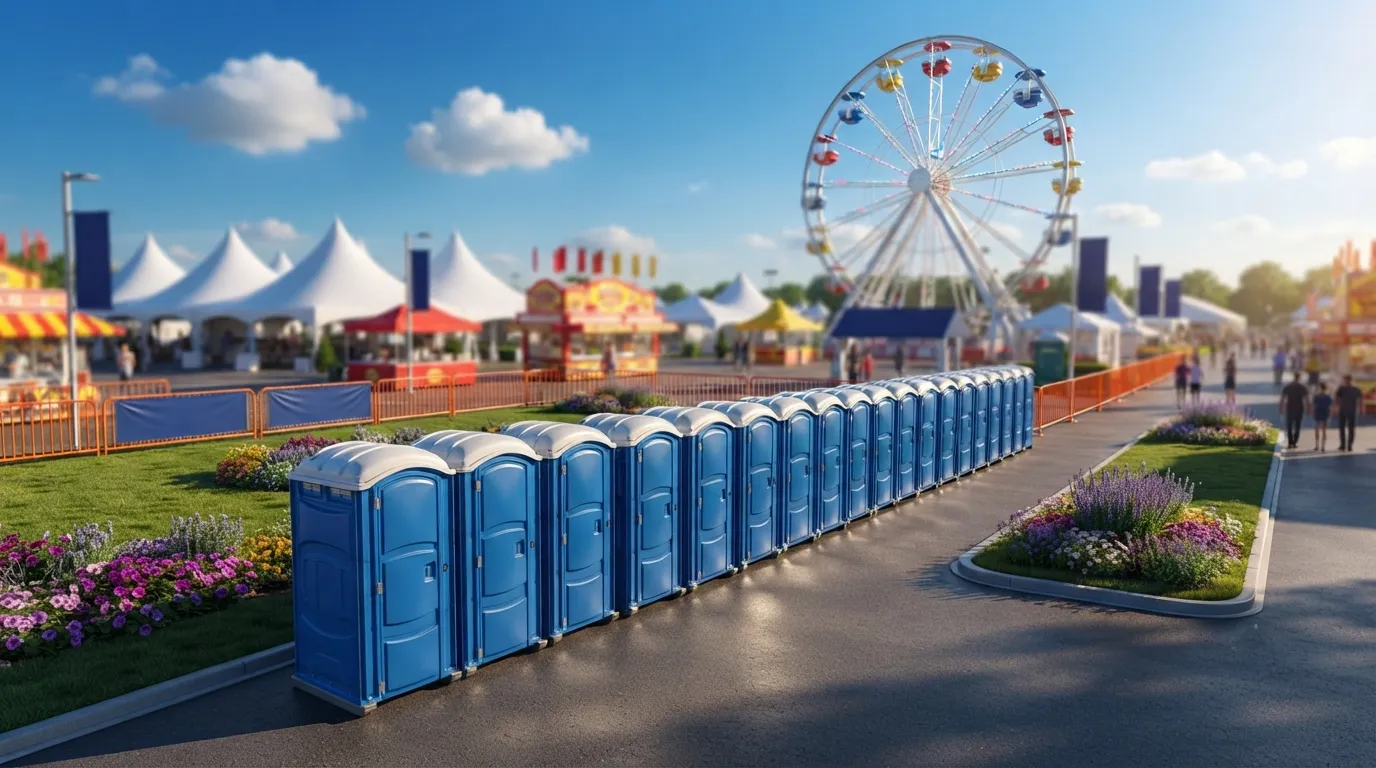
Start with your expected daily attendance, then work backward. OSHA 1926.51(c) sets construction-site ratios at one toilet per 20 workers, and while a fair is not a job site, fair organizers in Springfield use similar math scaled for public crowds and short peak windows. A midday rush at a livestock barn or main stage packs more people into less time than a workday shift ever does, so fair planners usually run tighter ratios than a construction crew would. Our how many porta potties do I need guide walks through the attendance math step by step. For most Springfield fairs we mix standard portable toilets near food courts and midways with at least one ADA accessible unit per cluster, per ADA Standards 213.2. Ground clearance matters too: ADA Standards 405.2 caps ramp slope at 1:12, so units on grass or gravel need a level pad, not just a flat-looking patch of field. If your fair runs a beer garden or a grandstand with its own crowd flow, treat each zone as a separate cluster with its own count rather than one number for the whole grounds. We also stage backup units near the event restroom rental zones that see the longest lines, usually the grandstand exit and the main food row.
What Restroom Options Work Best for a Multi-Day Fair?
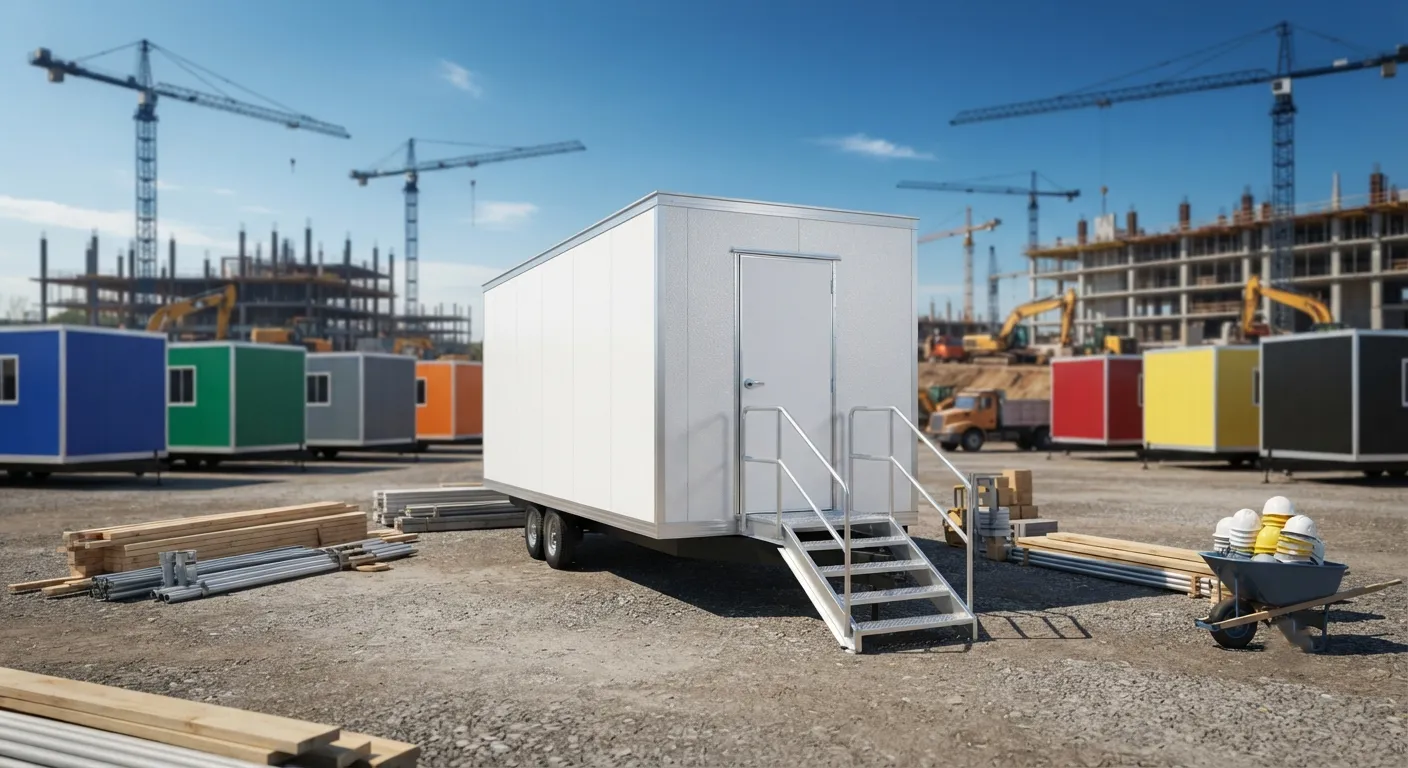
Multi-day fairs do best with a mix: standard units for volume, a deluxe flushable option near VIP or sponsor areas, and a restroom trailer if the fair runs an evening concert or a ticketed gala. A standard unit holds a 60 to 70 gallon tank and stands about 92 inches tall on a 44 by 48 inch footprint, small enough to tuck along a fence line without blocking foot traffic. For fairs with grandstand seating or a headline act, a 4 stall restroom trailer or 8 stall restroom trailer handles heavier flushable demand better than a bank of standards. Handwashing needs its own line item separate from toilets. 29 CFR 1910.141(d)(2) requires soap and towels or a hand drying device at washing stations, and hand sanitizer alone does not satisfy that. We pair every restroom cluster with a handwashing station or portable sink, and if your fair includes a fry booth or livestock wash pit, OSHA 1926.51(f)(1) applies to any operation involving paints, coatings or similar contaminants, worth flagging to vendors setting up on site. Overnight security matters too. A temporary fence rental around generator pads and trailer hookups keeps curious fairgoers away from equipment between gate closing and next morning's open.
Where Should Restrooms Be Placed on the Fairgrounds?
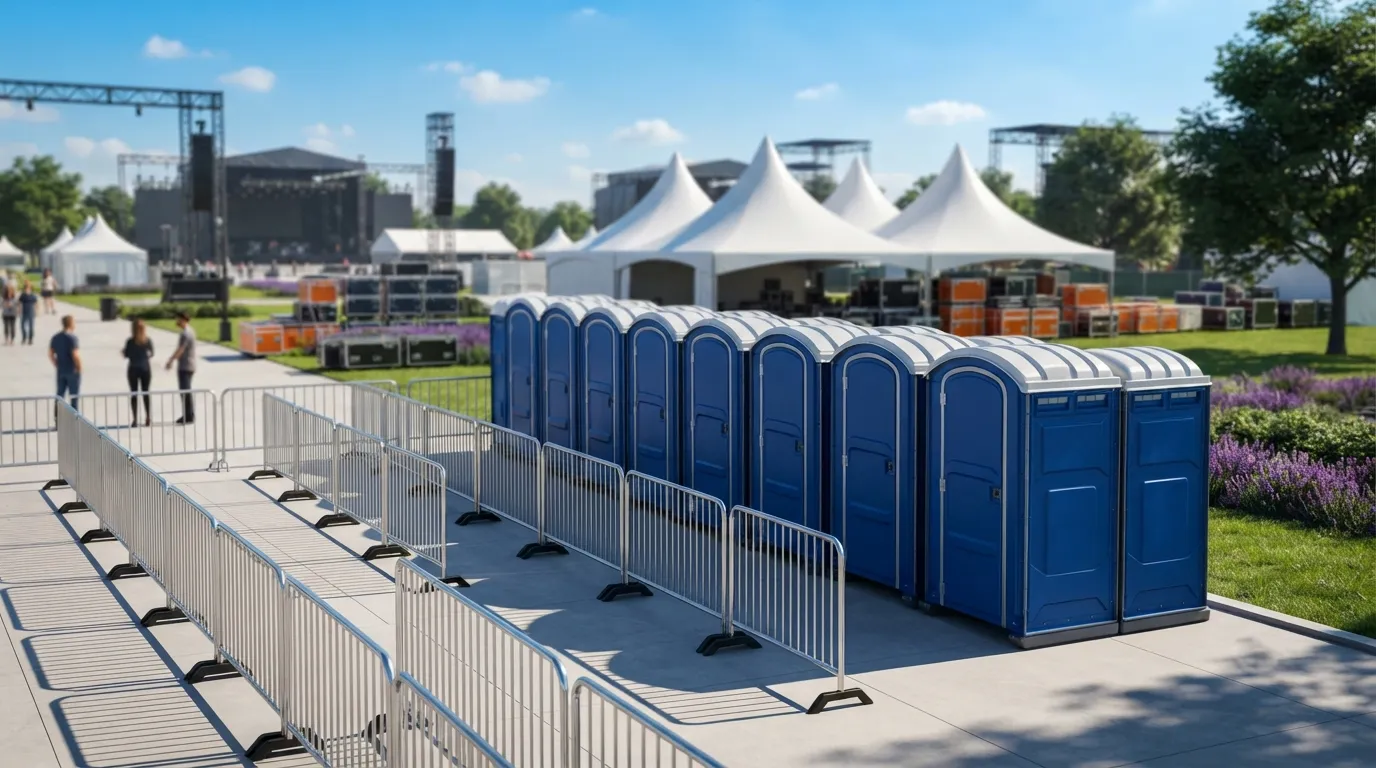
Restrooms belong at high-traffic crossing points, not tucked in a back corner where nobody walks past them naturally. Our porta potty placement guide covers ground stability and access lanes in more detail, but the short version: ADA Standards 302.1 requires stable, firm, slip-resistant ground, so a unit set on soft turf after rain needs matting or a gravel pad underneath. Clear door width matters for accessible units specifically, with ADA Standards 404.2.3 setting a 32 inch minimum opening, and the accessible route to reach it needs a 36 inch clear width under ADA Standards 403.5.1. Springfield fair sites often run generators for lighting and food trucks, so we coordinate delivery routes with your temporary power pole and light tower placement to avoid crossing cables with our service truck. A roll-off delivery needs about 60 feet of straight clearance behind the truck, which matters if your fairgrounds layout has tight access lanes between barns. If the fairgrounds sit within city limits, placement in the public right of way needs confirming with the City of Springfield before setup, since we have not verified a specific ordinance for fair events on this page. For fairgrounds near Chicopee, 6.6 miles north, or Ludlow, 8.3 miles northeast, we run the same placement standards and the same delivery window.
How far in advance should we book restrooms for a county fair?
Book six to eight weeks out if possible, since multi-day fairs in Springfield compete for the same truck fleet as weekend weddings and festivals. Peak fair season books faster than a single weekend event. Contact us through request a quote early to lock your date and unit count.
Do we need a separate handwashing station if we already have sinks in a food building?
Yes, if fairgoers outside the food building need to wash up too. 29 CFR 1910.141(d)(2) requires soap and a drying method at any washing station, and a single building's sinks rarely cover a whole fairground's foot traffic during peak hours.
Can we rent restrooms for just the weekend days of a longer fair?
Yes. Weekend rates apply when your event runs Friday through Sunday rather than a full week, and we can also mix daily units for slower weekdays with a bigger weekend push. Ask about a porta potty rental per day breakdown for mixed schedules.
What happens if a unit needs service mid-fair?
We schedule mid-run service based on your attendance curve, typically once daily for high-traffic clusters. ANSI/PSAI Z4.3 sets a weekly baseline for lighter use, but a county fair pushes well past that pace, so we adjust the route accordingly.
Is delivery included in the restroom rental price?
Delivery runs as a separate line item from the unit rental itself. Check porta potty rental cost for how delivery, service, and unit costs break down together for a Springfield fair booking.
Next step
Get a delivery date
Tell us the address, the dates and the headcount. We size the order and confirm the route.