
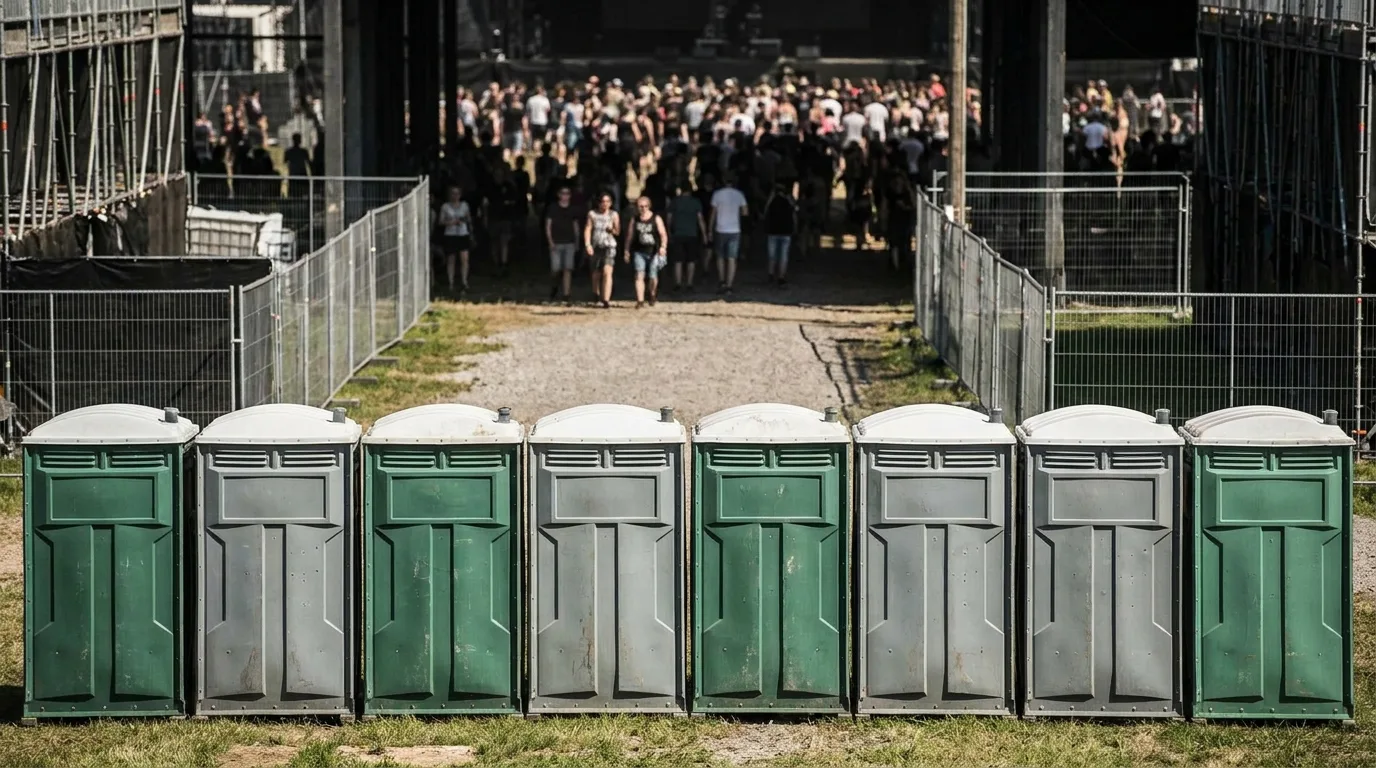
How Many Porta Potties Do I Need for a Jobsite?
Start with your crew size and let OSHA 1926.51(c) do the math. Up to 20 workers, you need 1 toilet facility. From 20 to 199 workers, it's 1 toilet seat and 1 urinal per 40 people. At 200 or more, that ratio drops to 1 per 50. A 35-person framing crew in Springfield falls in the second bracket, so 1 seat and 1 urinal covers it, though most contractors add a second standard porta potty rental so nobody walks across a muddy site to wait. Duration matters too. A one-week job might run on porta potty rental per day pricing, while a project stretching past a month usually makes more sense as a monthly porta potty rental. If you're unsure which bracket your crew falls into, the full breakdown lives at OSHA portable toilet requirements.
How Many Porta Potties Do I Need for an Event?
| headcount | 4 hours | 8 hours |
|---|---|---|
| 50 | 1 unit | 2 units |
| 100 | 2 units | 3 units |
| 250 | 4 units | 6 units |
| 500 | 8 units | 10 units |
These numbers assume no alcohol and dry weather. Add 1 unit per 100 guests if you're serving beer or wine, since drinking pushes bathroom trips up fast. A wedding of 150 in Springfield running 6 hours would land around 3 to 4 standard units, or you could step up to a deluxe flushable porta potty for a nicer guest experience. Multi-day festivals need daily servicing built into the quote, not just more units sitting there getting fuller. For a race or 5k, check marathon and race restrooms for spacing guidance along the course. Larger fairs and tournaments follow similar math; see county fair restrooms and golf tournament restrooms for use-case specifics.
Do I Need an ADA Accessible Unit?
Yes, if you're clustering portable toilets for public use. ADA Standards section 213.2 requires that at least 5 percent of clustered units be accessible, with a minimum of one no matter how small the event. That accessible unit needs a 60 inch turning circle inside per ADA Standards section 304.3.1, and the door opening has to clear 32 inches per ADA Standards section 404.2.3. Most Springfield events with 4 or more standard units should budget for at least one ADA accessible porta potty alongside them. The approach path matters as much as the unit itself: ADA Standards section 403.5.1 calls for a 36 inch clear route, and section 302.1 requires the ground surface be stable and slip resistant, which rules out setting a unit on loose gravel or soft turf without a mat. Full detail on placement is at ADA restroom requirements.
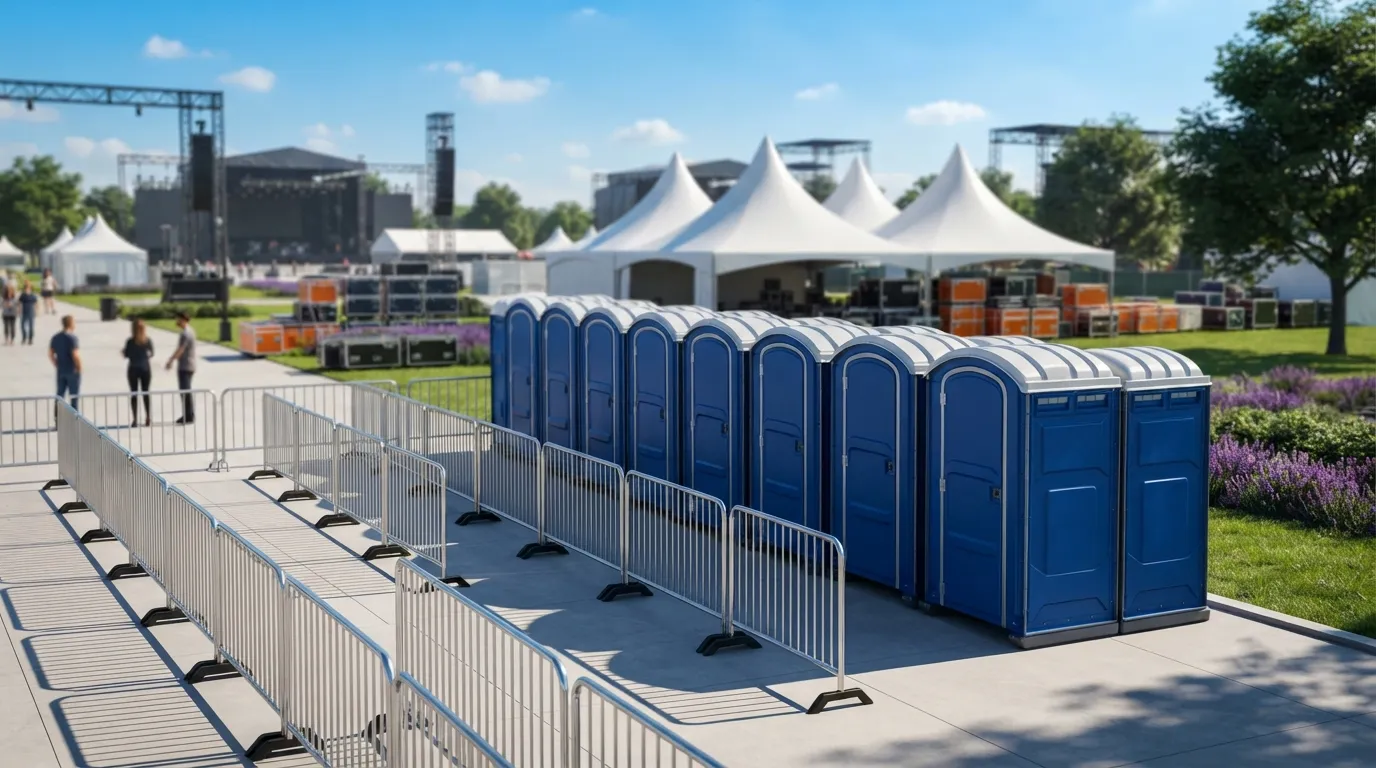
How Does Alcohol Change the Count?
Alcohol slows people down and speeds up bathroom trips, so the standard headcount ratio undersells what you'll need. Add roughly 1 extra unit per 100 guests when beer or wine is flowing, and more if it's an open bar running past 8 hours. A brewery festival of 300 people in Springfield, for example, would jump from the dry-event estimate of 5 units to closer to 8. Multi-day events compound this further, since tanks fill and don't empty themselves between days unless servicing is scheduled. A standard unit holds 60 to 70 gallons, which sounds like a lot until 300 people with drinks in hand start using it over 10 hours. For weekend festivals, pencil in daily service visits rather than a single drop-off and pickup. ANSI/PSAI Z4.3 sets the baseline service interval at once per week for 10 users over a standard 40 hour work week, which is a useful sanity check for how fast usage outpaces that baseline at a drinking event.
What's a Worked Example for a Construction Site?
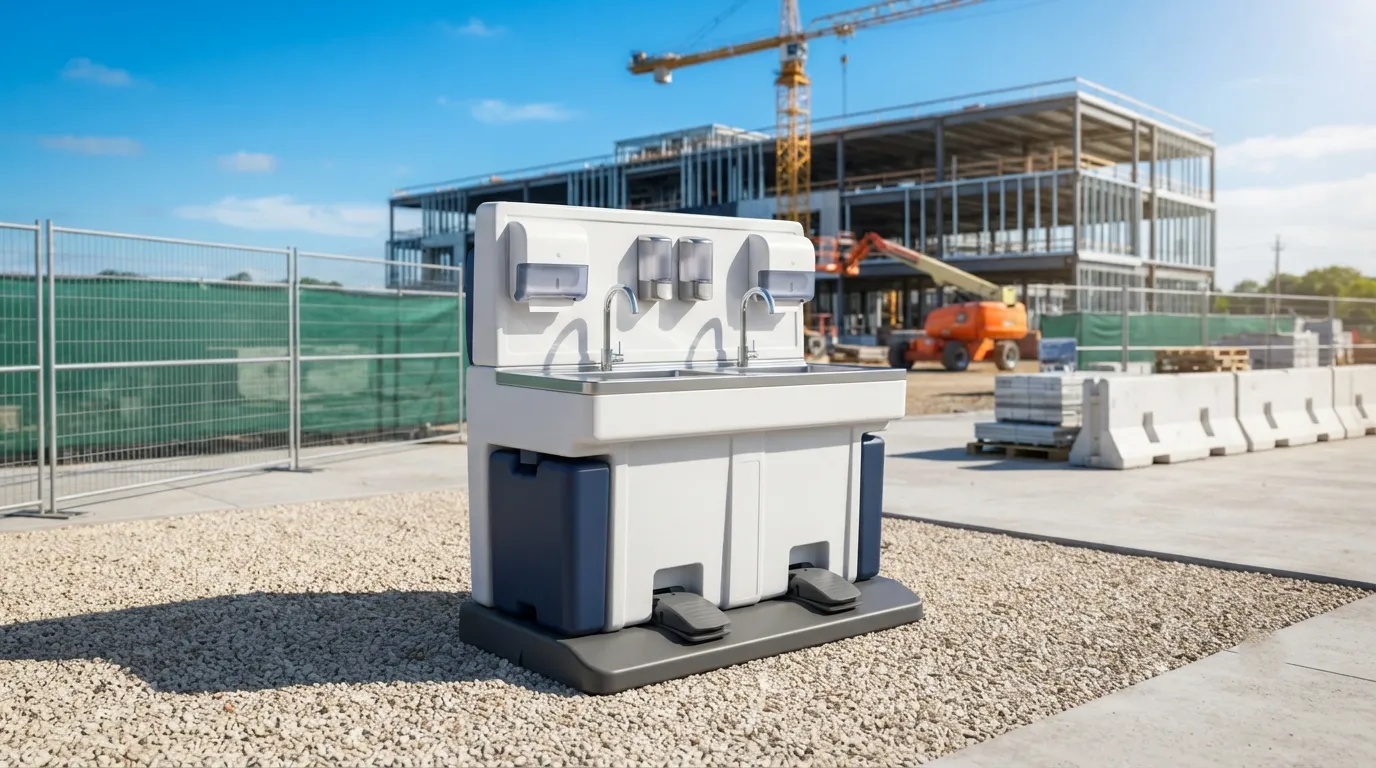
Take a 45-person road crew working a 6-month Springfield job. Under OSHA 1926.51(c), 45 workers sits in the 20-to-199 bracket, so the ratio is 1 seat and 1 urinal per 40 people, meaning 2 units minimum. Add a handwashing setup, since OSHA 1926.51(a)(1) requires potable water at all places of employment, and if anyone's applying coatings or sealants, OSHA 1926.51(f)(1) kicks in for washing after paint or coating work specifically. A handwashing station rental or portable sink rental covers that requirement, and 29 CFR 1910.141(d)(2) is clear that soap and towels are required, not hand sanitizer alone. For a 6-month run, monthly billing beats renewing weekly, and delivery logistics matter too if you're also bringing in a roll-off dumpster rental for debris. A 20 yard dumpster runs about 22 feet long, holds roughly 3,000 to 4,000 cubic feet, and answers how many tons does a 20 yard dumpster hold with a working range of 2 to 3 tons of mixed construction debris depending on the load. A 30 yard runs closer to 4,500 cubic feet, and how many tons can a 30 yard dumpster hold comes out to 3 to 4 tons, while a 10 yard is about 12 feet long, which covers how many feet is a 10 yard dumpster, and holds around 1,500 to 2,000 cubic feet, answering how many cubic feet in a 10 yard dumpster. A 40 yard dumpster tops out near 6,000 cubic feet, which is how many cubic feet in a 40 yard dumpster works out, and how many tons does a 40 yard dumpster hold lands around 4 to 5 tons for heavier debris. Delivery needs about 60 feet of straight clearance behind the truck, so plan the layout before the truck shows up.
What's a Worked Example for a Wedding?
A 120-guest outdoor wedding in Springfield running 5 hours with a cocktail hour needs more than the bare dry-event math suggests. Baseline for 120 people over 4 to 5 hours lands around 2 to 3 units, but since there's an open bar, add at least 1 more, putting the total near 3 to 4. One of those should be a deluxe flushable porta potty near the reception tent, since guests dressed up for a wedding notice the difference between that and a bare-bones unit. If the budget allows, a small restroom trailer rental like a 2 stall restroom trailer replaces several standalone units and gives guests something closer to indoor plumbing. Distance from the venue's power and water hookups affects trailer placement, so check that early. For venues without existing water access, a trailer with a built-in tank solves it without running a hose across the lawn.
Should I Rent More Than the Minimum?
Usually, yes. The OSHA and ADA numbers are floors, not comfort levels, and Springfield contractors who cut it too close end up with lines that slow the whole crew down. A good rule: if your headcount estimate is close to a bracket boundary, like 19 or 39 workers, round up rather than risk falling short mid-project. The same goes for events. Weather, delayed guests, and last-minute headcount bumps all push usage higher than the plan. If you need help walking through the numbers for a specific site or event, request a quote and describe the job. Springfield Porta Pros also handles the surrounding math on placement, since a unit set too far from work stations gets used less carefully. See the porta potty placement guide for spacing advice, and if the job is a genuine last-minute scramble, emergency porta potty rental covers same-day needs.
How many porta potties do I need for 100 guests?
For 100 guests over 4 hours, plan on 2 units; over 8 hours, closer to 3. Add 1 more if alcohol is served. This assumes standard units, not ADA-only counts, and ADA Standards section 213.2 still requires at least 1 accessible unit in the mix regardless of total headcount.
How many tons does a 30 yard dumpster hold?
A 30 yard dumpster typically holds around 3 to 4 tons of mixed debris, though heavier material like concrete or shingles fills the weight limit long before the volume does. Check dumpster weight limits before loading dense material, since overage fees apply.
How many cubic feet in a 20 yard dumpster?
A 20 yard dumpster holds roughly 3,000 to 4,000 cubic feet, translating to a metal container about 22 feet long. See dumpster sizes and dimensions for the full size lineup and how each compares on paper.
Do I need a separate handwashing station if I have porta potties?
Yes, if workers are applying paint, coatings, or pesticides, since OSHA 1926.51(f)(1) requires washing facilities specifically for those contaminant exposures. General jobsite sanitation under 1926.51(c) covers toilets, but handwashing needs its own setup with soap and towels per 29 CFR 1910.141(d)(2).
How far should a porta potty be from the work area?
There's no fixed OSHA distance for construction, but keeping units within a short walk keeps workers from skipping breaks. Agricultural field sanitation under OSHA 1928.110 sets a quarter-mile walking limit as a useful reference point for spacing decisions.
What's the difference between renting by the day versus the month for a long job?
Daily rates run higher per day but suit short jobs, while monthly rates spread the cost lower per day for longer projects. A 6-month road job in Springfield almost always comes out cheaper billed monthly; compare both structures at porta potty rental cost.
Next step
Get a delivery date
Tell us the address, the dates and the headcount. We size the order and confirm the route.