
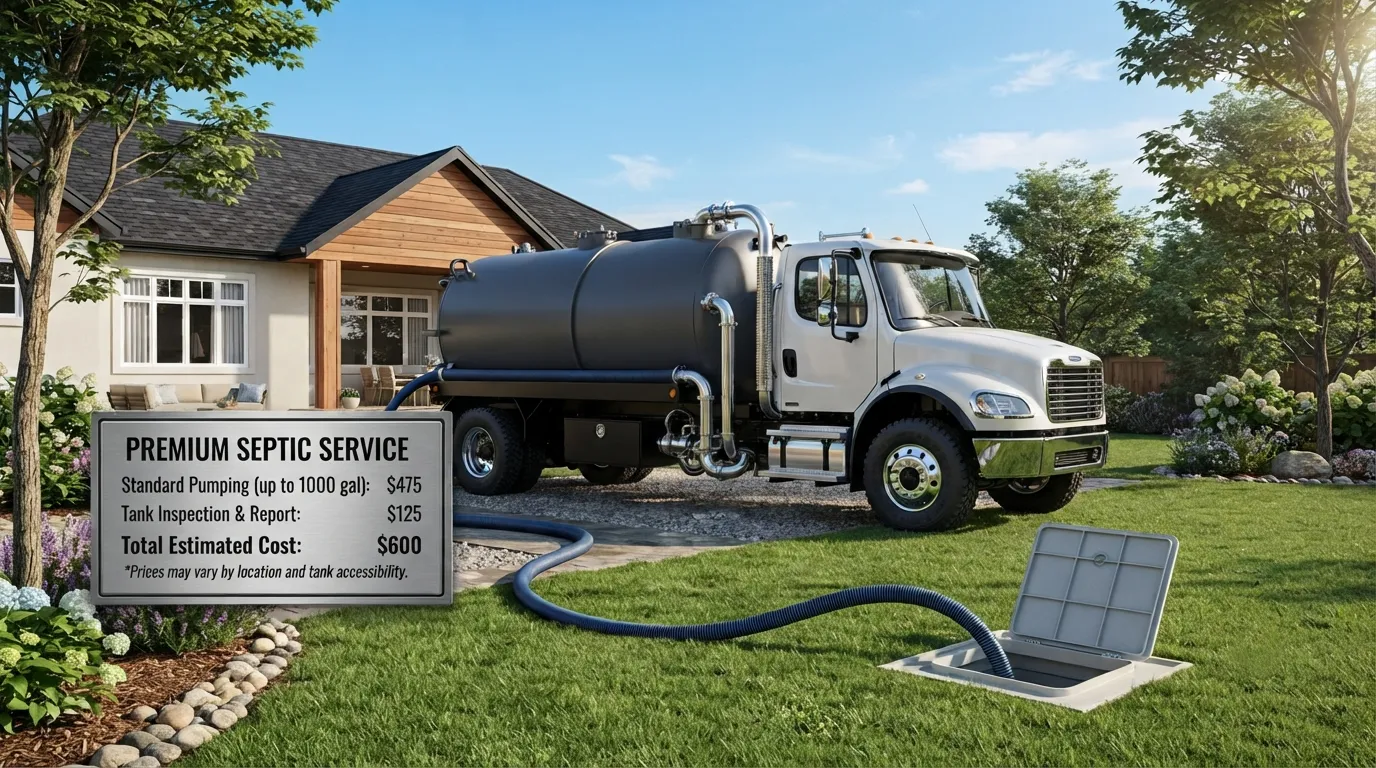
How much does septic tank pumping cost?
Most Springfield homeowners pay within the day-rate band below for a routine pump-out. The final number depends on tank size, how far the truck has to travel on your property, and whether the lid needs digging out. A tank that has gone untouched for 6 or 7 years often has more solids built up, which adds time on site. Septic pumping service calls in Springfield generally fall into one of two categories: scheduled maintenance or urgent response, and pricing differs between them.
| service | duration | low | typical | high |
|---|---|---|---|---|
| septic pumping | day | 150 | 250 | 300 |
| septic pumping | weekend | 50 | 100 | 150 |
Weekend jobs run lower here because they are often smaller holding-tank swaps rather than full tank pump-outs. If you are not sure which category your job falls into, septic tank pumping cost questions are easiest to answer with a quick look at your tank size and last service date. For construction sites needing a temporary tank instead of a home septic pump-out, see holding tank rental.
Why does septic tank cleaning price vary so much?
Access is the biggest swing factor. A tank buried under 18 inches of soil with no riser costs more to open than one with an exposed lid. Distance from the truck to the tank matters too, since hose length and pump time both increase with distance. Household size plays into it as well: a 1,000 gallon tank serving a family of five fills faster than the same tank serving a couple, which shortens the interval between pump-outs and changes how much solid material has accumulated by the time the truck arrives.
Homes on well water instead of municipal supply sometimes have different tank configurations, which can affect access time. If your Springfield property has never had a septic map made, that first visit takes longer because the crew has to locate the tank before opening it. Ongoing maintenance is more predictable once that map exists. For general information on septic tank cleaning in Springfield, our crews document tank location on the first visit so future calls go faster. Warning signs that you are overdue are covered on our septic tank warning signs page.

How often should a 1000 gallon septic tank be pumped?
A typical 1,000 gallon residential septic tank is pumped every 3 to 5 years, and the exact interval depends on tank size and household size. A larger household puts more solids into the tank per year, which shortens the safe interval. Smaller households or seasonal-use properties in Springfield can sometimes stretch closer to the 5 year mark. For a full breakdown of what drives that number, see how often to pump a septic tank.
Waiting past the recommended interval risks solids reaching the outlet baffle and backing up into the drain field, which turns a routine pump-out into a more expensive repair. This is different from a grease interceptor, which is pumped once fats, oils, grease and solids reach 25 percent of the liquid depth rather than on a fixed calendar. Restaurants and commercial kitchens in Springfield needing that service should look at grease trap pumping instead of standard residential septic pumping.
What is included in a septic tank pumping visit?
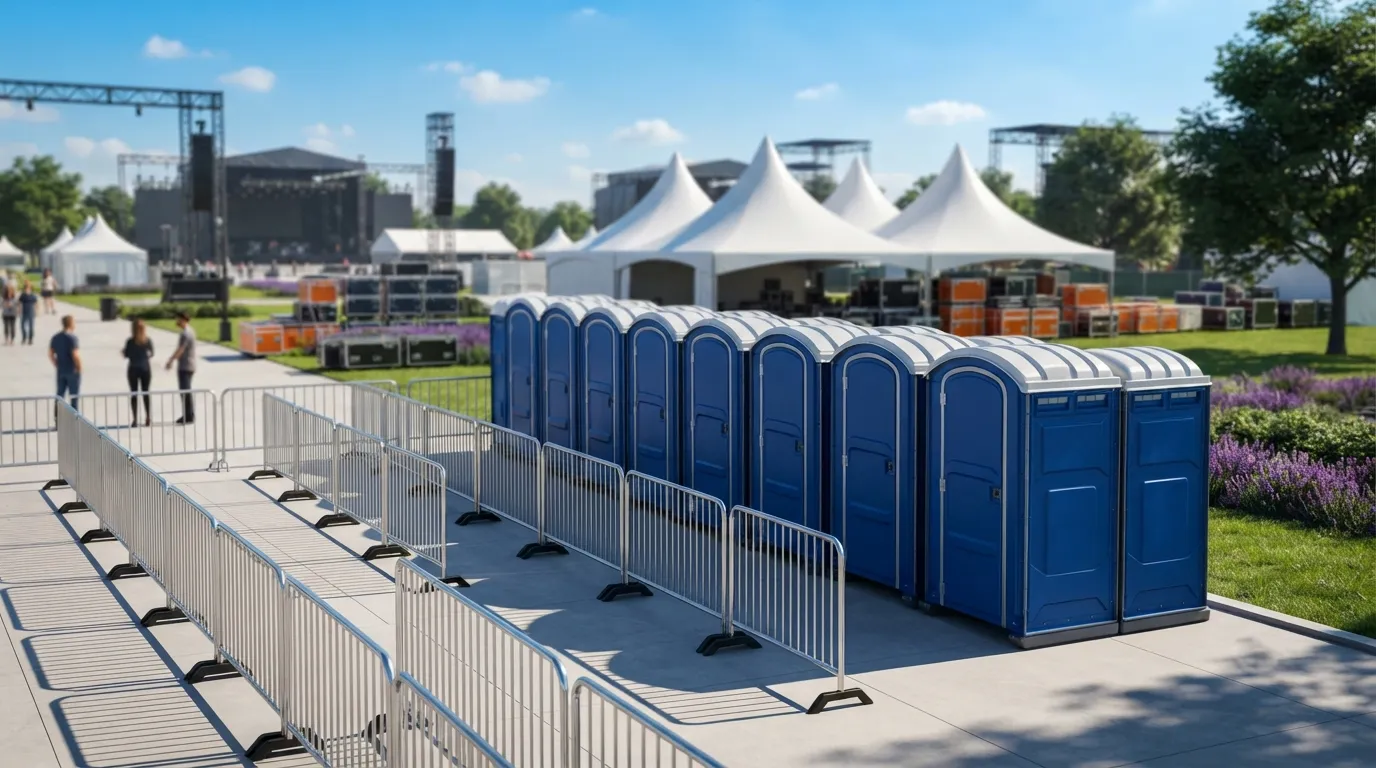
A standard visit includes locating the tank, opening the lid, pumping the contents, and a basic visual check of the baffles and tank walls. Springfield Porta Pros trucks carry the hose length needed for most residential setups, though properties with long driveways or tanks set far from the road may need additional setup time. If your property needs a portable restroom during a septic repair or replacement, portable restroom rental and portable toilet rental both cover that gap, and a standard porta potty rental unit can sit on site for the duration of the work.
Construction crews replacing a drain field often need a temporary fence rental around the excavation and a roll-off dumpster rental for old tank material and spoil. A 10 yard dumpster rental is usually enough for a single tank replacement, while larger drain field jobs may need a 20 yard dumpster rental. Homeowners doing a full septic system overhaul alongside other renovation work should also check home renovation porta potty options.
Is emergency septic pumping more expensive than scheduled service?
Yes. Emergency calls in Springfield, meaning same-day response to a backup or overflow, cost more than a pump-out scheduled a week or two out, since the crew has to rearrange the day's route. Emergency septic service is worth calling the moment you notice slow drains or standing water near the drain field, because waiting can turn a pump-out into a system repair. Farms and agricultural operations around Springfield with hand-labor crews should also know that OSHA 1928.110 requires field sanitation facilities, including potable water and toilets, at one per 20 employees within a quarter mile walk; see farm and agricultural restrooms for how that applies alongside septic service.
Job sites under general construction rules fall under OSHA 1926.51(c), which sets toilet counts by crew size rather than by septic tank capacity. Anyone unsure which standard applies to their site should check OSHA portable toilet requirements before committing to a rental plan. Springfield Porta Pros also serves Chicopee, about 6.6 miles north, and West Springfield Town, about 7.8 miles west, for septic and portable sanitation calls that fall outside city limits. Ludlow sits roughly 8.3 miles northeast and Agawam Town about 8.4 miles southwest, both within normal service range.
How much does it cost to pump a septic tank in Springfield?
A routine pump-out for a standard residential tank in Springfield typically runs 150 to 300 dollars for scheduled day service. Weekend or holding-tank service runs lower, between 50 and 150 dollars. Actual cost depends on tank size, access, and how long since the last pump-out.
How do I know if my septic tank needs pumping?
Slow drains, gurgling pipes, standing water near the drain field, or sewage odor near the tank are common signs. A 1,000 gallon tank generally needs pumping every 3 to 5 years based on household size. Check septic tank warning signs for a fuller list.
Does household size affect septic pumping cost?
Yes, indirectly. A larger household fills the tank faster, which can shorten the interval between pump-outs from 5 years toward 3. More frequent service does not raise the per-visit price, but it does raise the number of visits over time.
What is the difference between septic pumping and grease trap pumping?
Septic tanks are pumped on a calendar interval, usually every 3 to 5 years. Grease interceptors are pumped based on content, once fats, oils, grease and solids reach 25 percent of the liquid depth. See grease trap pumping for commercial kitchen service.
Can I schedule septic pumping the same week as construction work?
Yes. Many Springfield homeowners schedule septic pumping alongside drain field repair or home renovation projects. Pairing it with a dumpster rental cost estimate and a portable toilet rental for the crew keeps the whole job on one timeline.
Next step
Get a delivery date
Tell us the address, the dates and the headcount. We size the order and confirm the route.